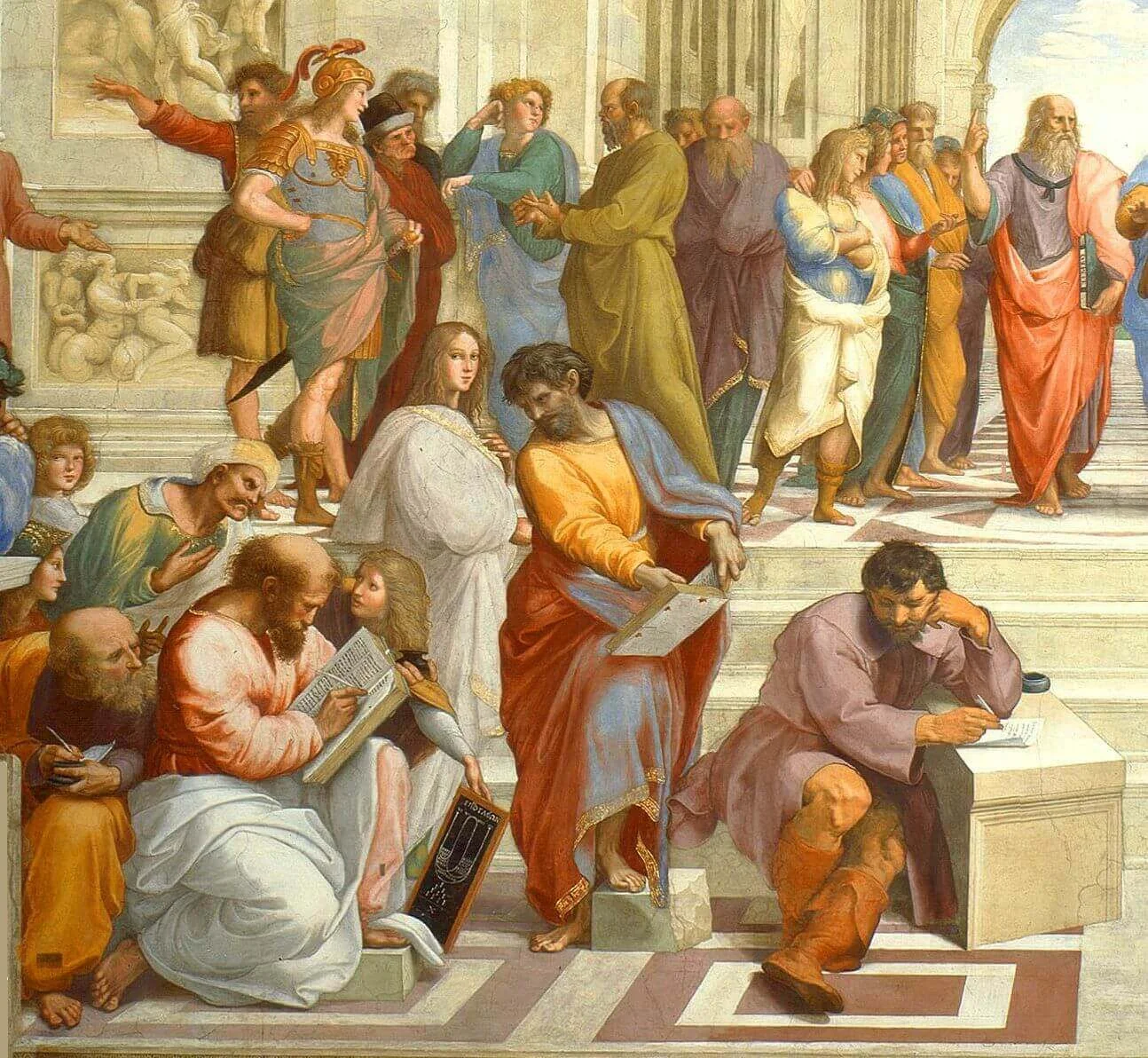
The philosopher Parmenides was born in the 6th century BCE. He is regarded as one of the founders of Western philosophy. According to the contemporary philosopher Peter Kingsley, he was the leader of a mystery school.
Parmenides wrote a poem in which he speaks of “different paths for thinking”. For centuries, philosophers have debated what exactly he meant. Their focus has mainly been on his concept of “being”.
As far as I know, no one has asked whether he may have understood “the paths” in the way we still speak today of “spiritual or religious paths”. The word Tao, for example, literally means “the way”, and Jesus Christ spoke of himself as “the way, and the truth, and the life”.
I read the poem in this way, and it then offers insight into the paths that human beings can take and have taken. From this perspective, it becomes clear that in the West we have taken a path of error since Plato. Yet Parmenides’ poem also points towards a path that does offer a horizon.
Excerpt from the book Truth Embodied (expected publication: autumn 2026):
According to Kingsley, Parmenides was a healer of a special kind. In Kingsley’s vocabulary, he was an Iatromantis: a healer who heals through prophecy. He was also a lawgiver, priest, and poet.
Kingsley sees parallels between the knowledge of Parmenides and Indian yoga. He partly explains these through the many (trade) connections that existed in ancient times between Greece, Babylonia, Persia, and India. He also sees parallels with shamanism, particularly regarding the ability to enter other states of consciousness.
Parmenides introduces his poem by describing how, as a “knowing one” — as one who is alive — he encounters the goddess of the underworld. Not as a dead person, as most mortals would encounter her. According to Kingsley, this means that Parmenides was an initiate into the mysteries of the underworld.
Reference:
Kingsley, P. (1999), In the Dark Places of Wisdom. The Golden Sufi Center.
Image: Parmenides, detail from The School of Athens by Raphael (c. 1509–1511). Public domain. Source: Wikimedia Commons.